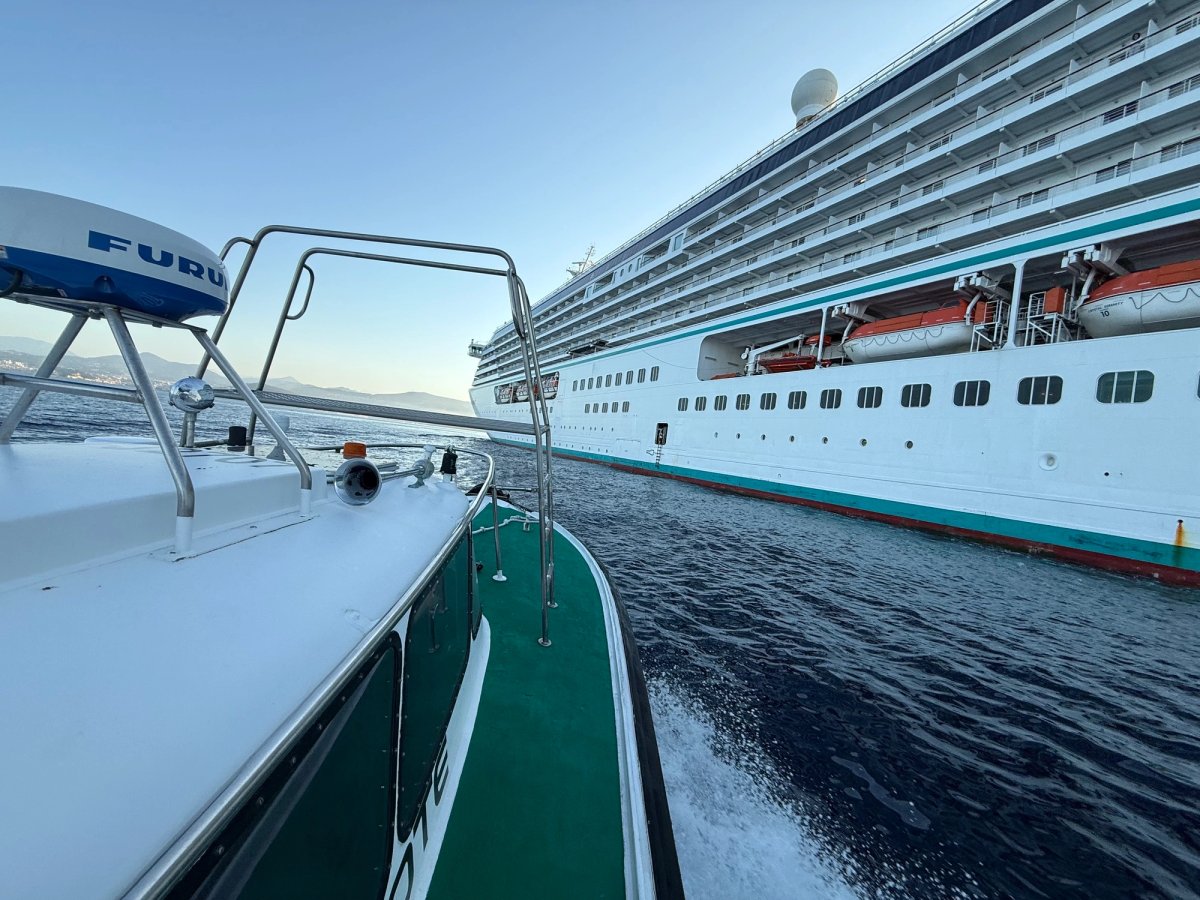

A port pilot boarding a yacht can be awkward for a captain. You know your vessel. You handle challenging conditions worldwide. Then a stranger climbs aboard to, essentially, take charge.
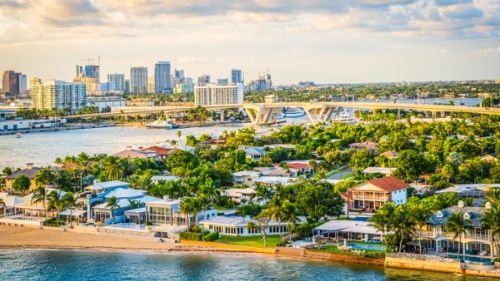
But the relationship is less about taking the captain's control away and more about adding local knowledge, said Port Everglades pilot Benjamin Fallon in Fort Lauderdale, Florida.
The distinction matters.
“We work with the captain,” Fallon said when asked about the conn. On commercial ships, that is issuing rudder, heading, and engine commands. On yachts, Fallon said, the approach is different.
Beforehand, the pilot and yacht captain conduct a master-pilot exchange. They discuss whether the captain wants to perform portions of the transit, whether tugs are needed, and what traffic, bridge, or other considerations could affect the passage. That conversation is important because the pilot brings something the captain may not have: detailed, current knowledge of the port.
Port Everglades, Fallon points out, has its own surprises. Currents can behave differently around man-made channels, drainage flows, and water discharges. Shoaling can change overnight. Large cruise ships and commercial traffic operate close to yachts; details not obvious on a chart.
In Port Everglades, pilotage is required in the designated magenta areas on charts. Pilots are dual licensed by the state of Florida and the U.S. Coast Guard. In general, Florida requires a state-licensed pilot for foreign-flag vessels drawing seven feet or more when entering or leaving a designated port.
Federal pilotage is required on U.S.-flagged vessels operating between U.S. ports. This also includes a U.S.-flagged vessel that leaves a U.S. port, goes out to sea and later returns to the same U.S. port without making any other port calls in between.
“Every ship is different,” Fallon said. “I don’t know how my day will go.”
That unpredictability is part of what attracts pilots to the profession. It is also why they spend years preparing. Fallon described months of studying for exams, covering rules of the road, federal and state law, aids to navigation, shiphandling, and local knowledge. Candidates face demanding chart-drawing requirements and extensive testing before becoming licensed.
The payoff comes during difficult jobs: boarding in darkness, handling strong winds, or helping a vessel through an especially challenging maneuver.
For yacht captains, however, the biggest question may be simpler: Why do I need this person if I can do it myself?
Sometimes the answer is the law. Sometimes it is local knowledge. And sometimes it is simply another professional focused entirely on getting the vessel safely through the port. Fallon said he rarely encounters issues with yacht crew. In fact, captains often ask how the pilot boarding arrangement went and what they could improve.
There can be frustration, particularly when a captain feels a pilot is being paid for a short, routine transit. Fallon argues that the cost should be viewed against what is at stake. A pilot is not there simply to protect the yacht.
A grounded or disabled vessel can obstruct a busy waterway, disrupt commercial traffic, and create consequences far beyond one yacht. Florida’s pilotage law is designed to protect people, property, the environment, and the state’s navigable waters. The same considerations apply to ports worldwide, although the rules vary and must be checked regionally.
Pilote Maritime performs about 2,000 pilotage operations on yachts each year in the French Riviera, said Benoit Dianoux, president of the Nice pilot station in France. And that number is growing.
“Yachts are always bigger,” Dianoux said, adding that although the number of yachts is increasing, the size of waterways is not. As a result, more yachts require a pilot.
Pilots can also protect yachts when owners make challenging requests. Yacht captains are accustomed to making the impossible happen for their owners, Dianoux said, but pilots have the authority to push back.
“As a representative of the French State, sea pilots are not employed by the owners; they can say, ‘No’ even to the richest person in the world,” Dianoux said. “Commander, you can tell the owner that it is not possible to go to this area, given the regulations, or the weather conditions.”"
Rather than saying no, maritime pilots can offer alternatives, helping prevent yachts from being put in dangerous or potentially illegal situations. Another peculiarity of working with yachts is the difficulty of planning.
“The destination of the yacht is not linked to cargo but to the satisfaction of the owner, who can change his mind very regularly,” Dianoux said.
Captains adapt, and pilots adapt as well, using tools such as WhatsApp to book. At the Nice pilot station, pilots are available day and night, with about one hour’s notice. For captains accustomed to being the final authority aboard their yachts, perhaps the best way to view a pilot is not as competition for the bridge, but as another set of experienced eyes.
“You have enough to worry about,” Fallon said.
The pilot knows the port. The captain knows the yacht. When the two professionals communicate well, they bring those two kinds of expertise together. Ultimately, that is what everyone wants: a safe, efficient passage.
For further information:
Port Everglades Pilots Association: pepilots.com
Official French Maritime: maritimelimits.gouv.fr
International Maritime Pilots’ Association www.impahq.org