
Rapid advances in technology and artificial intelligence are reshaping industries worldwide, and crew training is no exception.
However, the yachting industry has long faced challenges in providing training that extends beyond minimum requirements. “In terms of training, we certainly need more, and everybody in this industry ought to expect more — more training and to get better professionally,” Christophe Bourillon, CEO of the Professional Yachting Association (PYA), said. Bourillon is part of the European Commission-funded Erasmus program examining the skills required in yachting and whether current training meets those needs.
Bourillon notes that yachting tends to rely on bare-minimum training and that mandatory training requirements for superyacht crew are far below those of other industries such as aviation or oil and gas.
When it comes to technologies such as alternative propulsion, new fuel systems, and AI, he believes we just don’t have the appropriate training yet.
Ted Morley, CEO of Maritime Professional Training (MPT) in Fort Lauderdale, agreed that the industry is entering a period of rapid change. “The maritime sector, including yachting, is going to see an increase in the implementation of these technologies,” he said. “Alternative fuels are already coming into the industry as yacht owners look to batteries, hybrid, LNG, methanol, and potentially hydrogen fuel cells now.”
Morley served on the USCG advisory group on alternative fuels and semi-autonomous vessels, giving him firsthand insight into their impact on the maritime industry, and he noted that STCW is already being adapted to accommodate them. “Future training requirements will evolve and become more technical in nature,” he said, while AI and semi-autonomous technology are already finding their way on board and will likely take over many “mundane, repetitive operations.”
“I don’t believe we will see a huge reduction in crew size; rather, I believe we will see the crew duties reapportioned to facilitate a better guest experience and reduce crew fatigue,” he said. As vessels become more technologically advanced, the challenge will be ensuring training standards evolve to match.
“Training is dynamic and fluid in nature,” Morley said. “There will always be areas that need improvement. Vessels are getting bigger and more complex, the number of crew is increasing, the complexity of training them is increasing... The one constant is change.”
Red Tape & Regulation
As new technologies emerge, ensuring crew are properly trained depends not only on training providers but also on regulators.
As things evolve, Morley noted that regulation will always lag behind innovation, and yachting is no different. “Despite all the changes and advances in training, there are still areas of improvement and definitely areas that we will see more requirements coming into effect,” he said. Technology is a notable gap, he said — “Specialized systems require specialized training; the regulations aren’t keeping up with that.”
“In the past 10 years, we’ve made [training] improvements; things have gone better, but I believe we still have a long way to go,” Bourillon said, although he acknowledges he’s somewhat biased, as encouraging professionalism is one of the PYA’s primary objectives.
“As a whole, I believe we are still reactive; it’s hard not to be, as technology is moving so fast it’s really difficult to predict and forecast the training needs that are coming,” Morley said.
Talking Technology
“The ability to integrate technology and hybrid systems into virtually all aspects of the job will be crucial,” Morley said. “Computer skills will be a must for pretty much everyone on board.” He said alternative fuels will be among the first major additions to the STCW Code, as will dynamic positioning.
However, existing technology — such as dynamic positioning — may still be underutilized due to insufficient training. Bourillon said a PYA survey found that while many yachts were equipped with dynamic positioning, “…quite a number of them did not use it because they didn’t have any training or minimum training.” When asked whether a dynamic positioning course designed specifically for superyachts would be useful, 93% said yes.
Training delivery is also evolving alongside technology. While mandatory training remains governed by STCW requirements, Morley said training providers are increasingly using simulators, 3D technology, and blended learning to better prepare crew for modern vessels. Although practical training in firefighting or survival can’t be replaced, online training complements it.
“Blended learning will continue to be utilized as it provides the best of both worlds,” Morley said. “It allows training and knowledge review on the student’s schedule whilst retaining the incredible benefits from having an expert with years of experience to participate in face-to-face training sessions.”
Leadership & Culture
As technology becomes more sophisticated, leadership and interpersonal skills should not be neglected.
Morley said that it’s vital, especially as crew and department sizes continue to grow. “Integrating people from different cultures, different beliefs, different experience levels requires a high level of leadership and managerial training,” Morley said. “STCW addresses that in several mandatory courses, but there is still room to improve.”
The PYA found that captains and senior crew showed interest in leadership — and it’s been a long-standing issue in yachting. These are basic skills in other industries, but Bourillon notes that yachting has a gap. “Every time I have a yacht captain or HOD walk into the PYA office, I ask him or her, ‘What are the three things you don’t have that you wish you had?’ And every single time, senior management tells me: leadership training,” Bourillon said.
He sees leadership training, soft skills, and people management as major structural weaknesses in yachting. While other high‑risk or high‑responsibility industries, like aviation, require managers to attend regular leadership refreshers, superyachts generally do not, even though captains and HODs consistently say leadership training is what they’re missing.
The training culture could be better, too. “The problem we also have is that on yachts… the industry is finding it difficult to allocate time for training, be it on board or for the crew to go back to… school‑type training,” Bourillon said. As Bourillon highlighted, in aviation, refresher courses are mandatory every so often, or they cannot fly.
“A lot of yacht owners or guests are CEOs … who would invest a lot of money to make sure they have the best talent working for them in their companies,” Bourillon said. “Why don’t they do it on the yacht?” In some ways, Bourillon said, training still appears negotiable in yachting.
Morley believes it’s improving, however. “We are seeing more and more yachts implement a rotation schedule and/or give the crew time to train,” he said. “This remains an area that needs improvement, but there are signs that it’s happening more and more.” Morley also cautioned the crew to consider making sure the yacht that pays for your training actually gets to benefit from it. While training can obviously open doors elsewhere, think twice before jumping ship, as there can be advantages to staying.
Don’t Forget the Fundamentals
While technology likes to take all the headlines, it’s no time to forget traditional marine skills. Both Bourillon and Morley agreed that crew seem to be losing touch with important skills in all departments. “Paper charts, celestial navigation, hands-on engineering, etc., are all skills that are perishing,” Morley said. “It’s important that as we address new technologies, we don’t forget the core skills that make us mariners.”
Ultimately, the goal of crew training isn’t simply to keep pace with technology. It’s to ensure safer operations and a higher standard of service for owners, guests, and crew alike. As Bourillon put it, “At the end of the day, a better-trained crew is a better and safer boat.”
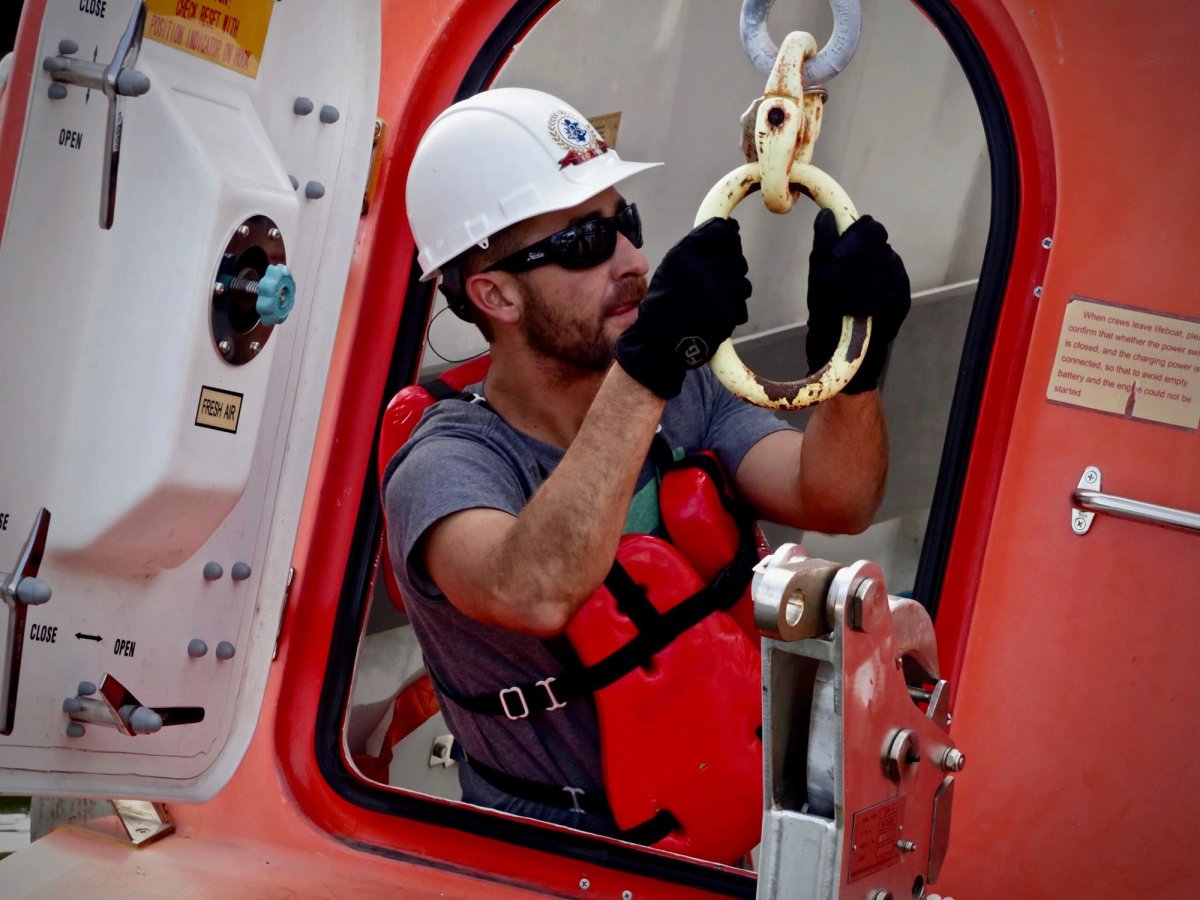
Image by MPT.